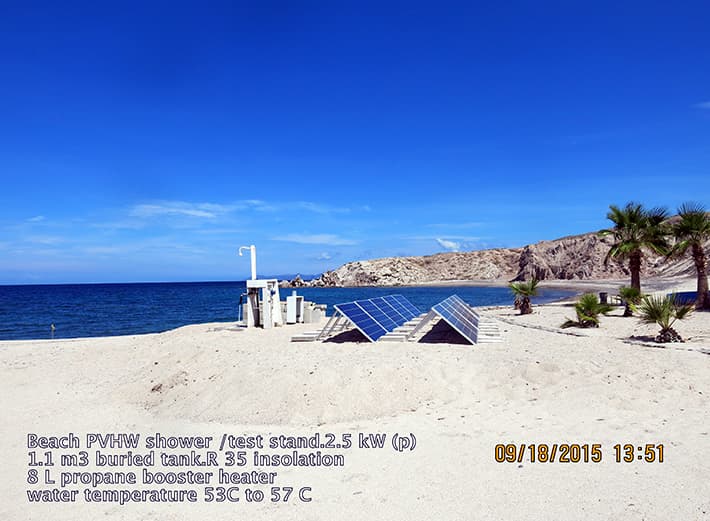
What the prototype included
- Collector
- Dedicated photovoltaic modules
- Heating element
- Low-voltage tubular resistance elements; one historical label identified 30 VDC / 250 W
- Storage
- Approximately 1.1 m³ insulated water tank proposed for a single-family prototype
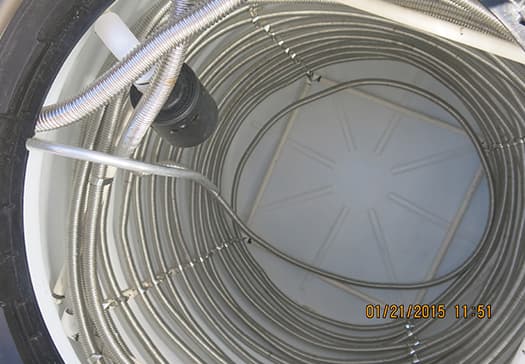
- Heat exchanger
- Historical description: 50 m of corrugated 316L stainless tubing, 1-inch diameter
- Controls
- Prototype electrical control enclosure documented in photographs
- Status
- Original site said SRCC testing had been initiated and certification was forthcoming; no completed certification is claimed here
What the team was trying to eliminate
The design avoided a roof-to-tank solar-fluid loop and therefore aimed to reduce freeze protection, stagnation or overheating management, circulators, and fluid-loop maintenance. It also proposed low-voltage operation without an inverter for the dedicated heating circuit.
Technology choice
No water-heating technology is automatically preferred. Selection depends on climate, codes, load, building constraints, equipment availability, energy prices, incentives, maintenance capacity, and whether electricity has higher-value uses.